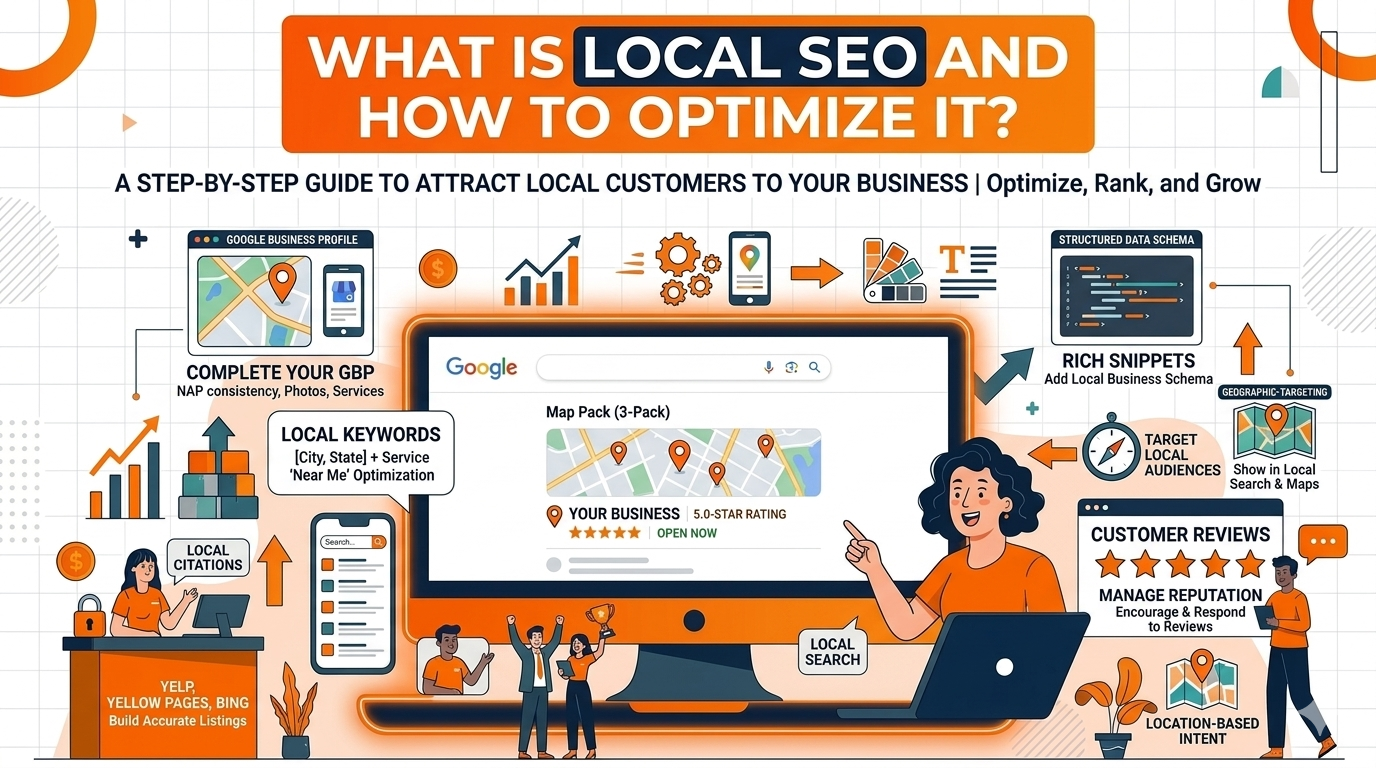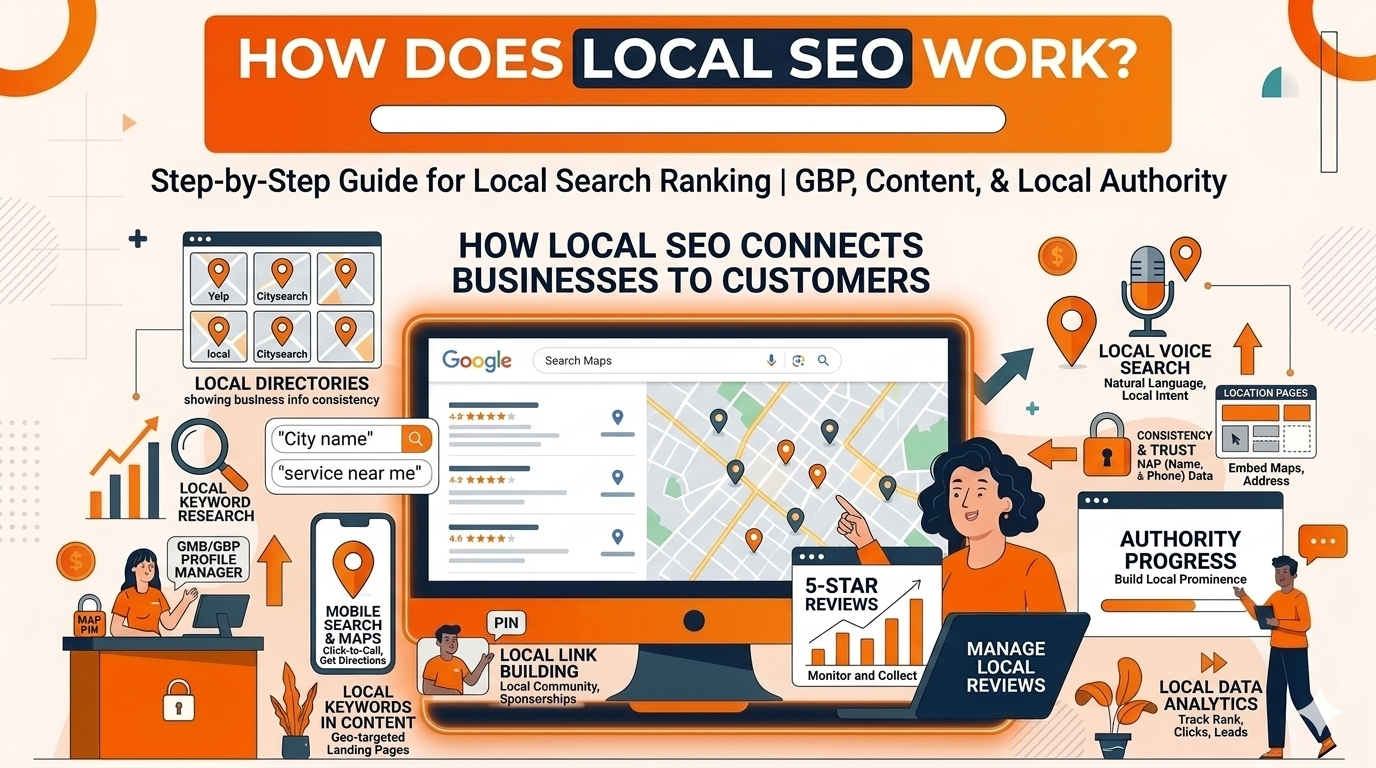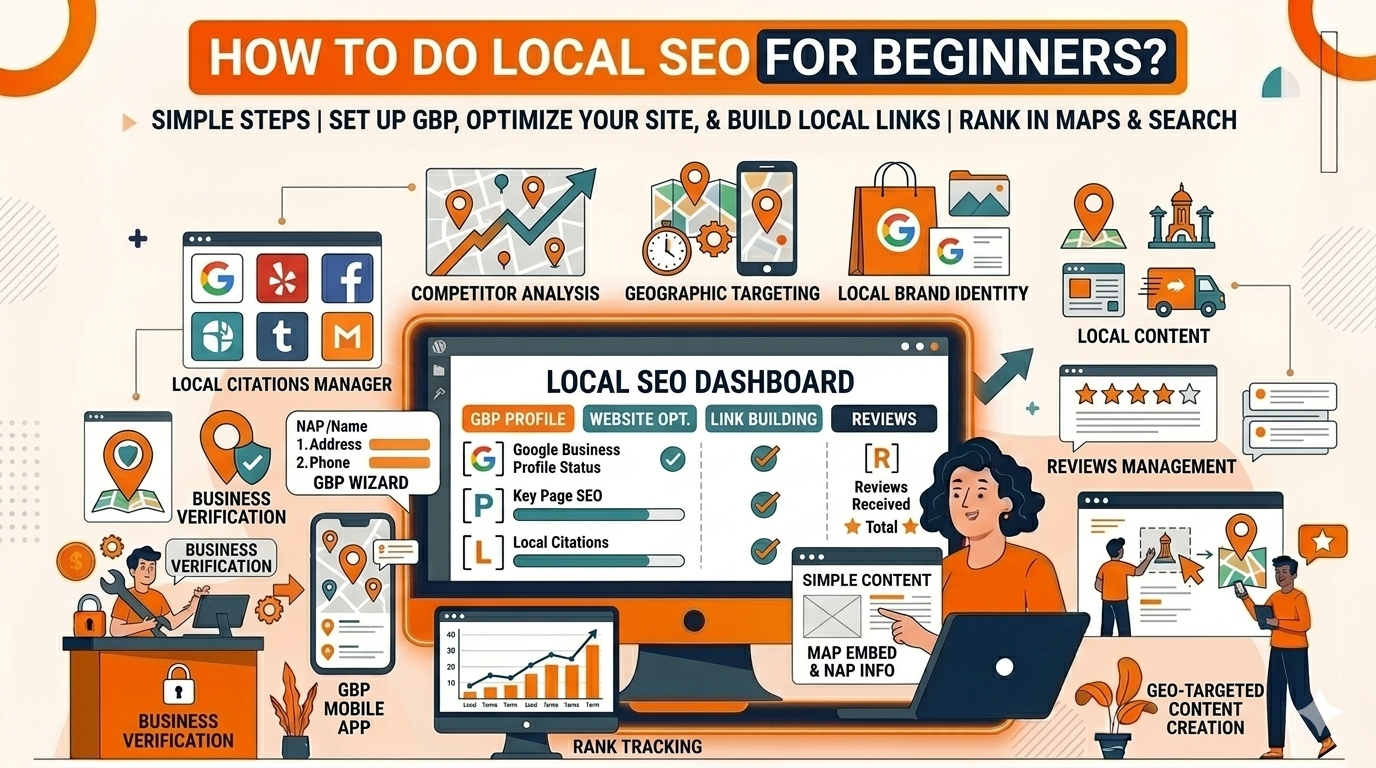
How to Rank in Local SEO: A Practical Guide for South African Businesses
Want your business to appear at the top of Google when local customers search for what you offer? This guide breaks down exactly how to rank in local SEO — covering every strategy South African businesses need to dominate Google Maps and local search results in 2025.
What Does It Mean to Rank in Local SEO?
Ranking in local SEO means your business appears prominently in Google search results when someone nearby searches for the products or services you offer. This includes appearing in the Google Local Pack — the map with three business listings that appears at the top of local search results — as well as ranking in the organic results directly below it.
For South African businesses, local SEO ranking is one of the most valuable sources of new customers. When someone in Durban searches “plumber near me” or “best hair salon in Johannesburg,” the businesses that rank at the top of those results get the calls, the bookings, and the walk-ins. Those that do not rank are essentially invisible to that potential customer.
Before diving into how to rank, it helps to understand the full picture. Read our guides on what local SEO is and how local SEO works if you are new to the concept. If you want to understand the investment required, see our guide on how much local SEO costs in South Africa.
Google uses three core factors to determine local rankings: Relevance (does your business match what the person searched for?), Distance (how close is your business to the searcher?), and Prominence (how well-known and trusted is your business online?). Every strategy in this guide targets one or more of these three factors.
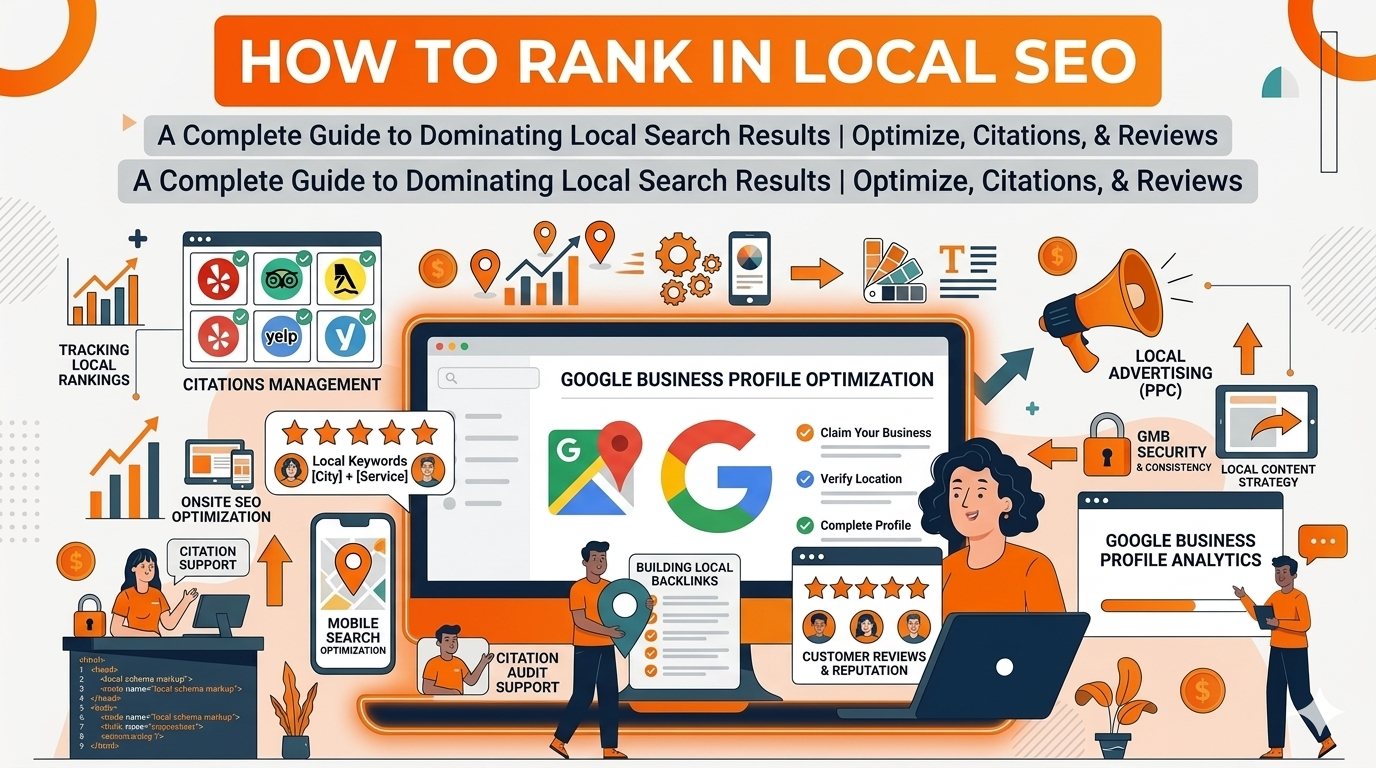
1 – Optimise Your Google Business Profile
Your Google Business Profile (GBP) — formerly known as Google My Business — is the single most important factor for ranking in local SEO. It is what powers your appearance in Google Maps and the local pack. If your GBP is incomplete, inaccurate, or unclaimed, you are handing those top positions to your competitors.
How to Optimise Your Google Business Profile for Local Rankings
- Claim and verify your listing – go to google.com/business and claim your profile if you have not already; verification is required before your listing becomes active
- Choose the correct primary category – your primary business category is one of the strongest ranking signals in local SEO; be as specific and accurate as possible
- Add secondary categories – include all relevant service categories your business offers to appear in a wider range of local searches
- Write a keyword-rich business description – naturally include your main services and your location in your 750-character business description
- Add all your services with descriptions – list every service you offer, add a description for each, and include pricing where relevant
- Upload high-quality photos regularly – businesses with photos receive significantly more clicks and direction requests; add photos of your premises, team, work, and products
- Keep your opening hours accurate – update your hours for public holidays and special occasions; incorrect hours erode customer trust and can hurt your ranking
- Post weekly GBP updates – use the Posts feature to share offers, news, and updates; regular posting signals to Google that your business is active
2 – Get Your On-Page SEO Right
Your website needs to clearly communicate to Google which location you serve and what services you offer. This is called on-page SEO — optimising the content and structure of your web pages so Google understands your relevance for local searches. Without strong on-page SEO, even a perfect Google Business Profile will struggle to rank consistently.
If you need a website that is built for local SEO from the ground up, read our guide on what WordPress website design involves — a properly built WordPress site makes on-page SEO far easier to implement and maintain.
On-Page SEO Essentials for Local Rankings
- Include your location in your page titles – for example, “Electrician in Cape Town | ABC Electrical Services” — this tells Google exactly what you do and where
- Write location-specific meta descriptions – your meta description should mention your service and your city or area to improve click-through rates from local search results
- Use local keywords naturally in your content – mention your service area, neighbourhood, and city throughout your page copy without keyword stuffing
- Create a dedicated page for each service – rather than listing all your services on one page, give each service its own page so Google can rank it individually for relevant searches
- Create location pages if you serve multiple areas – a separate, unique page for each city or suburb you serve gives you a far better chance of ranking in each location
- Add your NAP (Name, Address, Phone) to your website footer – consistent NAP details across your site and GBP are an important local ranking signal
- Embed a Google Map on your contact page – this reinforces your location relevance to Google and helps customers find you easily
Think about how your customers actually search. They type things like “affordable dentist Pretoria” or “emergency plumber near Sandton” — not just “dentist” or “plumber.” Your page content, titles, and headings should reflect the way real local customers search for businesses like yours.
3 – Build Local Citations Consistently
A local citation is any online mention of your business name, address, and phone number — known as your NAP. Citations appear on business directories, social media profiles, review sites, and industry-specific platforms. Google uses citations as a trust signal — the more consistent and widespread your citations are, the more confidence Google has that your business is legitimate and locally established.
Key South African Directories for Local Citations
- Brabys – one of South Africa’s most established business directories
- Yellow Pages SA (yp.co.za) – a high-authority South African directory trusted by Google
- Hotfrog South Africa – a widely used small business directory with good domain authority
- Cylex South Africa – another strong local citation source for SA businesses
- Snupit – a popular South African service provider directory used by local customers
- Google Business Profile – the most important citation of all
- Facebook Business Page – social citations count; ensure your Facebook details exactly match your GBP
- Industry-specific directories – if your industry has its own association or directory, getting listed there is valuable for both citations and credibility
Your business name, address, and phone number must be identical across every directory, social profile, and your own website. Even small differences — like “Rd” vs “Road” or a different phone number format — can confuse Google and hurt your local rankings. Audit your existing citations regularly to fix any inconsistencies.
4 – Generate and Manage Google Reviews
Google reviews are one of the most powerful factors in local SEO ranking. Businesses with more reviews, higher average ratings, and recent reviews consistently outrank those with fewer or older reviews. Beyond rankings, reviews build trust with potential customers — most South Africans read online reviews before choosing a local business.
Ask Every Satisfied Customer for a Review
The simplest and most effective way to get more Google reviews is to ask — directly and promptly after a positive interaction. Send a follow-up WhatsApp message, email, or include a review request card with every job. Make it as easy as possible by sharing your direct Google review link so customers do not have to search for your listing.
Respond to Every Review — Positive and Negative
Responding to Google reviews shows Google and potential customers that your business is active and engaged. Thank customers for positive reviews and address negative reviews professionally and constructively. Businesses that respond to reviews rank better in local search and convert more profile visitors into actual customers.
Never Buy or Fake Reviews
Purchasing fake Google reviews violates Google’s policies and can result in your entire Google Business Profile being suspended. This would remove you from Google Maps and the local pack entirely — a devastating outcome for any local business. Build your reviews organically through great service and consistent asking.
Want Help Ranking in Local SEO?
Our local SEO service starts from R799 per month and includes Google Business Profile optimisation, citation building, review strategy, and monthly reporting — everything your South African business needs to rank on Google Maps.
5 – Create Local Content That Targets Your Area
Publishing local content on your website is one of the most effective long-term strategies for ranking in local SEO. When you create blog posts, guides, and service pages that specifically mention your city, neighbourhood, or region alongside your services, you give Google more signals that your business is relevant for local searches in that area.
Local content also helps you rank for a wider range of search terms — not just your main service keywords, but also informational searches that local customers make before they are ready to buy. This builds your authority in Google’s eyes over time.
Local Content Ideas for South African Businesses
- Write a blog post answering the most common questions your local customers ask — for example, “How much does it cost to rewire a house in Durban?”
- Create area-specific service pages — for example, “Plumbing Services in Umhlanga” or “Accounting Services in Sandton”
- Publish case studies and project spotlights from local clients — this naturally includes local place names and builds social proof
- Write about local events, news, or community topics relevant to your industry — this signals strong local relevance to Google
- Create guides that help local customers — for example, “How to Choose a Reliable Electrician in Cape Town” positions your business as the obvious choice
6 – Build Local Links and Authority
Local link building means getting other reputable South African websites to link back to yours. These backlinks are a strong signal to Google that your business is credible, established, and worth ranking. For local SEO, the most valuable links come from locally relevant sources — not random overseas directories.
How to Build Local Links for Your South African Business
- Get listed on your local Chamber of Commerce website – most South African cities have a Chamber of Commerce that lists member businesses with a link to their website
- Sponsor local events or charities – sponsorships often come with a backlink from the event or organisation’s website
- Partner with complementary local businesses – a plumber and an electrician can refer each other with links; a photographer and a wedding venue can do the same
- Get featured in local online publications – Durban newspapers, Joburg community blogs, and regional business publications often feature local businesses and link to their websites
- Create genuinely useful content – guides, tools, and resources that other South African websites want to link to naturally are one of the most sustainable link-building strategies
- Industry associations – if your trade or profession has an association in South Africa, becoming a member often includes a directory listing with a link
7 – Fix Technical SEO Issues on Your Website
Even with a perfect Google Business Profile and excellent local content, technical problems on your website can prevent you from ranking well in local SEO. Google needs to be able to crawl your website easily, and your visitors need a fast, smooth experience — especially on mobile. Technical SEO addresses the behind-the-scenes factors that affect how Google reads and ranks your site.
Technical SEO Checklist for Local Rankings
- Mobile-friendly design – over 70% of local searches in South Africa happen on mobile devices; if your site is not mobile-friendly, you are losing both rankings and customers
- Fast page speed – use tools like Google PageSpeed Insights to test your site; slow websites rank lower and lose visitors quickly, especially on South African mobile networks
- HTTPS security – your website must have an SSL certificate (the padlock in the browser bar); Google will not rank unsecured sites prominently
- No broken links or 404 errors – broken pages frustrate visitors and waste the crawl budget Google allocates to your site
- Correct schema markup – adding LocalBusiness schema to your website helps Google understand your business name, address, phone number, opening hours, and service area at a technical level
- Sitemap and robots.txt – ensure your sitemap is submitted to Google Search Console and your robots.txt file is not accidentally blocking important pages from being crawled
- Clean URL structure – use descriptive, keyword-relevant URLs like /plumbing-services-durban/ rather than /page?id=45
Google Search Console is a free tool that shows you exactly how Google sees your website — including any crawl errors, mobile usability issues, and which search queries are bringing visitors to your site. Every South African business with a website should have it set up and checked regularly.
8 – Track Your Local SEO Rankings and Results
Ranking in local SEO is not a one-time task — it is an ongoing process. Tracking your results helps you understand what is working, where you are improving, and where more attention is needed. Without tracking, you are making decisions blindly and cannot measure the return on your local SEO investment.
To understand the full process of implementing and maintaining local SEO month by month, read our complete guide on how to do local SEO. For pricing and package options, see our local SEO services page or read about how much local SEO costs in South Africa.
What to Track for Local SEO Success
- Google Business Profile Insights – track how many people are viewing your profile, clicking through to your website, requesting directions, and calling your number directly from GBP
- Local pack rankings – use a rank tracking tool to monitor where your business appears in the local pack for your key search terms each week
- Organic search traffic – Google Analytics shows you how many visitors are reaching your website from organic search and which pages they are landing on
- Review count and rating – track how your Google review count and average rating are growing over time
- Website enquiries and calls – ultimately, the goal of local SEO is more leads; track how many enquiry form submissions and phone calls your website generates each month
- Citation consistency – periodically audit your citations across all directories to catch and fix any inconsistencies before they affect your rankings
Let Us Handle Your Local SEO from R799/Month
We take care of every step in this guide — Google Business Profile optimisation, citations, content, link building, technical fixes, and monthly reporting. You focus on running your business; we focus on getting you found on Google.
- Ranking in local SEO means appearing in Google Maps and local search results when nearby customers search for your services
- Google ranks local businesses based on Relevance, Distance, and Prominence — every strategy in this guide targets these three factors
- Your Google Business Profile is the single most important factor for local pack rankings — claim, verify, and fully optimise it
- On-page SEO — including location keywords, service pages, and NAP consistency — helps Google understand your local relevance
- Consistent citations across South African directories like Brabys, Yellow Pages SA, and Hotfrog build trust with Google
- Google reviews are a powerful ranking signal — ask every satisfied customer and respond to every review
- Local content, local links, and technical SEO work together to build lasting local authority and ranking strength
- Track your GBP insights, rankings, traffic, and leads monthly to measure progress and guide your ongoing strategy
- 99Webiz local SEO packages start from R799 per month — professional, transparent, and built for South African small businesses