
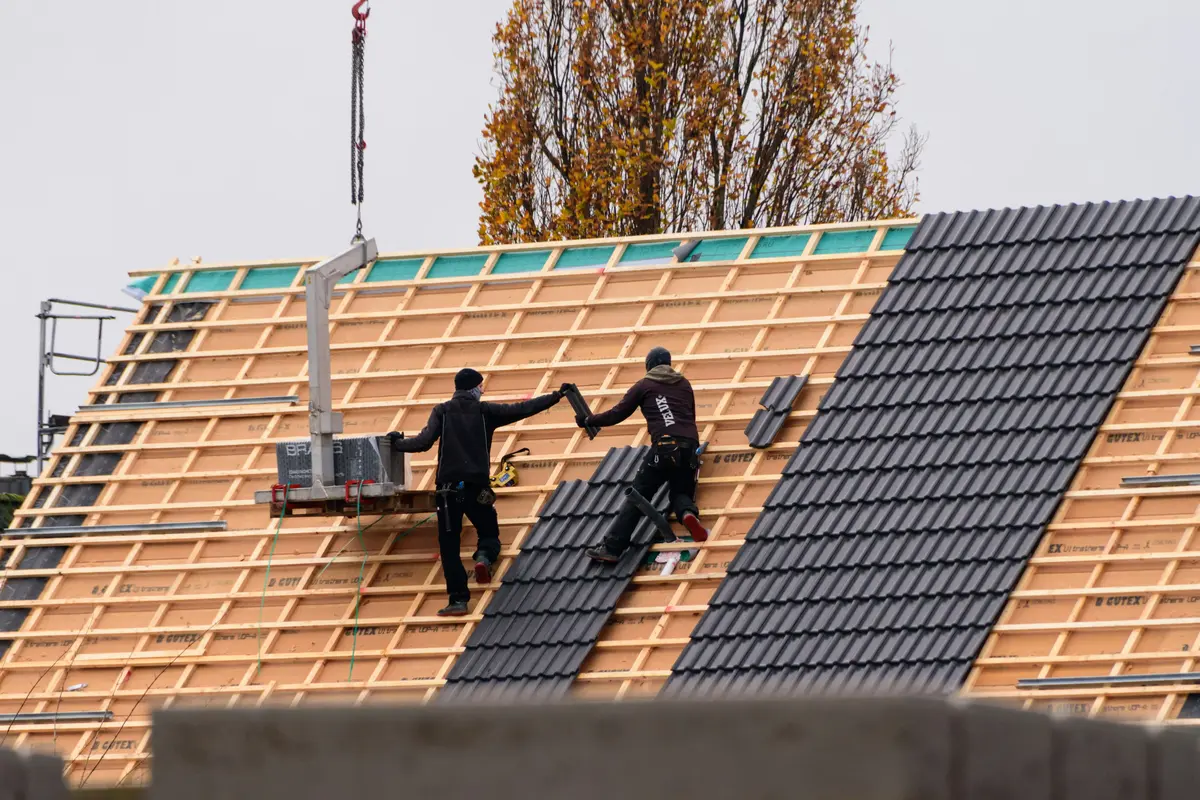
You didn't get into roofing to spend every calm month waiting for the next hailstorm, then scramble alongside a dozen storm-chasers all quoting the same panicked homeowners within days of each other. That's the cycle for a lot of South African roofing contractors, quiet for months, then flooded with rushed insurance claim work, competing against fly-by-night operators who patch a roof badly and disappear before the next rainy season proves it.
The real enemy here isn't the weather, it's building a business that only exists in the gap between storms, and getting quietly lumped in with the cowboys who gave the whole trade a bad name. Figuring out how to get roofing work that isn't entirely storm-dependent means building the accreditation, relationships, and proof that make you the contractor called directly, not just another quote after the next hailstorm.
Why Storm Season Alone Isn't a Business Model
Storm and hail damage work is real and valuable, but building a business entirely around it means your income rises and falls with the weather, and every storm brings a fresh wave of undercutting competitors doing rushed repairs. A roof is also one of the few parts of a home a client genuinely cannot inspect themselves, which means trust matters more here than almost any other trade. Getting roofing work steadily means combining storm response capacity with year-round channels that don't depend on a single weather event.
1. Get NHBRC Registered and Join RIASA or SAMCRA
Roofing contractors in South Africa are required to be registered with the National Home Builders Registration Council (NHBRC), and the Roofing Industry Association of South Africa (RIASA) is the industry's voluntary body promoting standards among established roofing contractors. If your work is mainly metal roofing and cladding, the Southern African Metal Cladding and Roofing Association (SAMCRA) plays a similar role for that side of the trade, focused on installation standards and training.
None of these registrations are optional extras when a client is deciding who gets to work above their heads with their family below. Feature your NHBRC registration and any association membership clearly on your website and quotes, since it's one of the few things a nervous client can actually verify before you're on the roof.
Want a Website That Explains What You Offer?
Our website design service can build you a clear, mobile-friendly site listing your accreditations, service areas, and completed roofs, so clients and referral partners know exactly what you offer before they ever call.
2. Build Relationships With Insurance Assessors and Loss Adjusters
A large share of roofing work in South Africa comes through home insurance claims after storm or hail damage, and insurers rely on assessors and loss adjusters to confirm the damage and recommend contractors. Getting known to a handful of assessors in your area means you can be recommended for claim work directly, rather than competing with every storm-chaser who arrives in the same neighbourhood after the same storm.
Reach out to independent loss adjusters and insurance brokers active in your area, share your NHBRC registration and association membership, and make it easy for them to bring you into a claim early. This channel still depends on weather, but it puts you ahead of the general scramble instead of inside it.
3. Build Referral Relationships With Builders and Architects
New builds, extensions, and full renovations all need a roofing contractor at a specific stage, and this work has nothing to do with storm season, which makes it a genuine counterbalance to claim-driven income. Builders and architects generally use the same trusted roofer repeatedly once they've had a clean, on-schedule experience.
Approach two or three renovation contractors, builders, or architectural practices in your area, share your completed projects and accreditation, and offer a straightforward trade rate for repeat work. A single builder who brings you onto every new build can smooth out the feast-and-famine pattern that storm work alone creates.
4. Document Every Job Like the Client Will Never Climb Up There
Most clients will never personally inspect their finished roof, they'll trust that the flashing was sealed properly, the underlay was fitted correctly, and the ridge tiles won't lift in the next wind. That trust gap is exactly where a documented handover protects both you and the client.
Photos of flashing, underlay, and ridge work taken before final covering, not just the finished exterior
Confirmation of the materials and brand used, matching what was quoted
A written workmanship warranty stating what's covered and for how long
NHBRC registration and any association membership referenced on the invoice
A note of any pre-existing damage found and photographed before work began, to avoid later disputes
Handing over this kind of documentation as standard practice, not just when a client asks for it, is exactly the kind of professionalism that separates a contractor a builder trusts from another name on a hailstorm quote list.
5. Show the Roof Nobody Else Can See
Since a client can rarely see their own roof from the ground, clear photos, ideally including a simple drone or ladder shot of the finished job, do more to build trust than almost any other trade's before-and-afters. This is one of the biggest differences between marketing roofing work and marketing something like painting or flooring, where the client can walk into the room and judge the result themselves.
Keep a photo record of every completed roof, from the framing and underlay stage through to the finished exterior, and use it on your website and social pages. A client who can actually see what a properly installed roof looks like underneath is far more likely to trust your quote over a cheaper one with no photos at all.
- Get NHBRC registered and join RIASA or SAMCRA to prove you're not one of the storm-chasers giving the trade a bad name
- Build relationships with insurance assessors and loss adjusters to get recommended directly for storm and hail damage claims
- Build referral relationships with builders and architects for new-build and renovation roofing work that isn't storm-dependent
- Document every job with photos of the parts a client will never personally see, plus a written workmanship warranty
- Photograph the full roof build, not just the finished exterior, since it's proof a client can't get any other way
This is what how to get roofing work actually looks like once you stop waiting on the next storm. Not another name in a rushed post-hail quote list, but the roofer an insurance assessor already recommends, the one a builder calls first, and the one whose documented, photographed work speaks for itself on a roof no client can inspect on their own. Once these pieces are in place, most of it keeps bringing in work quietly in the background, storm season or not. If your current website isn't pulling its weight in that mix, take a look at our website design services and we'll help you build one that does.
Continue Reading
How to Get Clients for a Moving Company
How to Get Painting Jobs
How to Get Landscaping Clients
How to Get Construction Clients
How to Get Roofing Work
How to Get Clients for a Transport Business