
You didn't get into flooring to spend half your week driving back to a job you finished two months ago because the vinyl is bubbling near the window or the laminate has started to lift at the joints. Most flooring installers accept this as the cost of doing business, another callback, another awkward conversation, another day not billed. It quietly eats the margin on every job it touches, and it's the main reason flooring feels feast or famine even when the phone is ringing.
The truth is that most comebacks trace back to something that happened before a single plank or tile was laid, a screed that was never properly tested, a subfloor that looked dry but wasn't. Figuring out how to get flooring jobs that don't turn into repeat visits starts there, not with a bigger ad budget. The installers who stop living job to job are the ones who've built a pipeline of builder referrals, tested every substrate properly, and let their finished work do the selling.
Why Comebacks Are the Real Threat to Steady Work
Flooring is unusual among trades because the biggest threat to a contractor's reputation often isn't bad workmanship, it's a material failure that only shows up weeks later, after the installer has already moved on to the next job. A homeowner or builder who's had one bad experience with lifting laminate or bubbling vinyl doesn't just avoid that installer, they start assuming all flooring work is a gamble. Getting more flooring jobs consistently means proving upfront that you don't cut that corner, and then making sure the people who refer work, builders, designers, agents, know it.
1. Build Relationships With Renovation Contractors, Designers, and Agents
A steady stream of flooring jobs rarely comes from one-off homeowners searching online. It comes from renovation contractors who need a flooring subcontractor for every project, interior designers specifying finishes for clients, and estate agents preparing a home for sale who need new flooring done fast and correctly before a viewing. These referral sources send repeat work without you ever having to bid against five competitors on price.
Reach out to two or three local renovation contractors and one or two interior designers, show them recent work, and offer a straightforward trade rate for repeat jobs through that relationship. A single renovation contractor doing steady work can replace months of chasing individual leads.
Want a Website That Explains What You Offer?
Our website design service can build you a clear, mobile-friendly site listing your flooring types, service area, and finished projects, so builders and homeowners know exactly what you offer before they ever call.
2. Test the Substrate Before Every Glue-Down Job, and Document It
Most flooring comebacks on vinyl, engineered wood, and laminate installations trace back to one cause, moisture in the screed or concrete slab that wasn't properly checked before the adhesive went down. In South Africa, flooring installers commonly test this using the Carbide Method Equivalent (CM%) scale, and a reading under 4% CM is generally considered dry enough to proceed with a glue-down installation. Skipping this step to save half an hour on-site is how a job that looked fine on handover day ends up bubbling two months later.
Testing every substrate and keeping a simple record, a photo of the meter reading, the date, and the area tested, does two things. It protects you if a failure later turns out to be caused by rising damp rather than workmanship, and it gives you something concrete to mention to a nervous client or builder who's had a bad experience with another installer before.
A moisture meter reading for every room, taken and photographed before adhesive is applied
Confirmation the reading falls within the manufacturer's specification for the flooring product
A note of any cracks, unevenness, or damp patches found on the screed before installation
A dated record kept with the job file, not just remembered
A short line on the invoice or handover sheet confirming the substrate was tested and passed
3. Specialise in One Difficult Installation and Own It Locally
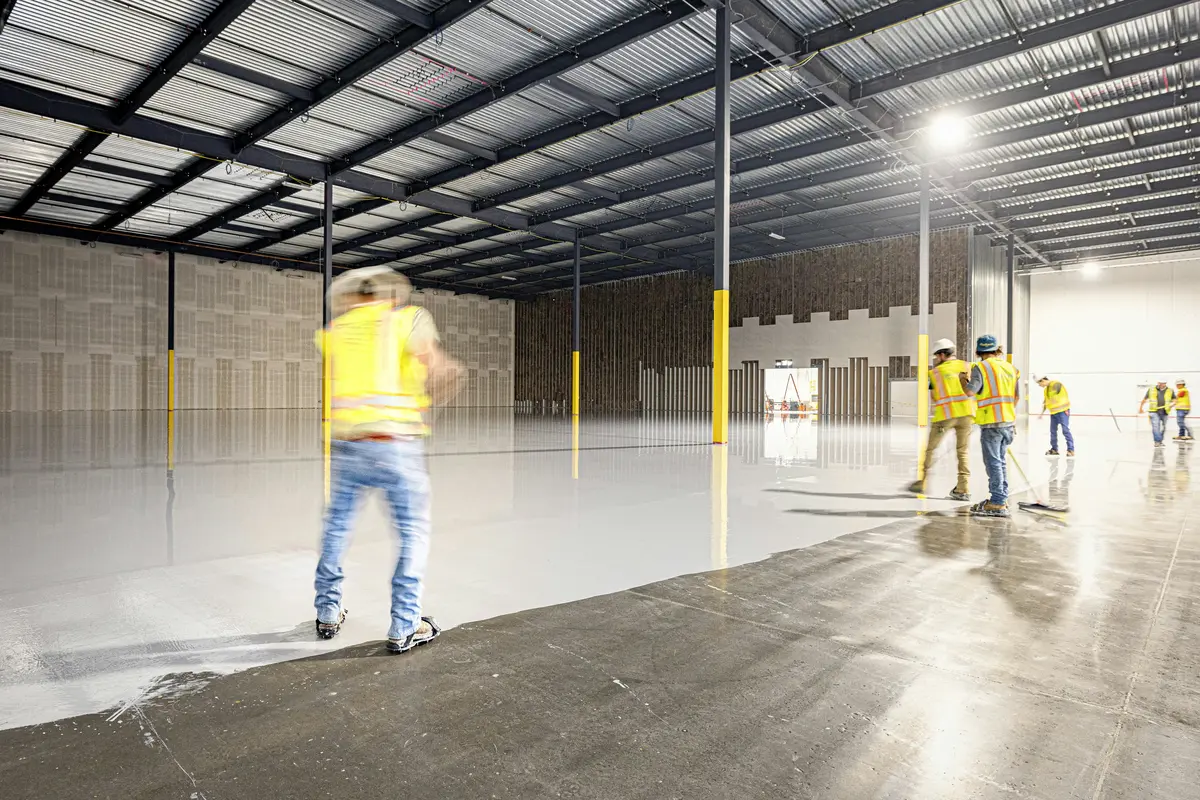
Most flooring contractors in a given area can lay straightforward laminate or standard tile, which is exactly why that end of the market is so price-sensitive. Herringbone parquet, large format porcelain tile, epoxy and polished concrete finishes, and complex transitions between flooring types are harder to get right, and far fewer installers advertise them confidently. Becoming known as the installer who handles the jobs other contractors turn down gives you a category with much less price competition.
Pick one specialty that matches equipment or skills you already have, feature it clearly on your website and in conversations with referral partners, and price it as the specialist work it is rather than matching a generalist's per square metre rate.
4. Turn Every Finished Floor Into Visible Proof
A freshly finished floor photographs well in almost any light, and most flooring contractors still don't do it consistently. Clear before-and-after photos of every job, especially the trickier ones, herringbone patterns, tricky transitions, large open-plan areas, build a portfolio that shows straight lines and tidy finishing far better than a verbal description. Ask for a short review right after handover, while the client is still standing in the room admiring the new floor.
Pair this with the moisture testing record from earlier, and you have proof of both the finish and the process behind it, which is exactly what separates a professional flooring business from someone with a tile cutter and a bakkie.
5. Track New Build and Renovation Work Like a Pipeline
New residential developments, office fit-outs, and larger renovation projects budget for flooring as a defined line item, and this work is often awarded through a formal quote process to a shortlist of contractors rather than picked up from an ad. Small developers and project managers checking for flooring subcontractors are easy to miss if you're only responding reactively to individual leads.
Set aside time each week to check in with the builders and project managers you already know about upcoming work, rather than waiting for them to remember to call you. Being top of mind when a project reaches the flooring stage is often the difference between winning that contract and finding out about it after someone else already has.
- Build direct relationships with renovation contractors, designers, and estate agents so flooring work comes to you before it's advertised
- Test every substrate with a moisture meter before glue-down installations, and keep a dated photo record as proof
- Specialise in one harder installation type to stand out from generalist competitors on more than just price
- Photograph every finished floor and ask for a review right after handover, while the result is still fresh
- Check in regularly with builders and project managers about upcoming work instead of waiting for them to call
This is what how to get flooring jobs actually looks like in practice. Not competing on the lowest price per square metre, but being the installer a renovation contractor already trusts, the one who tests every substrate properly before laying a single plank, and whose finished work speaks for itself in photos and reviews. Once these pieces are in place, most of it keeps working quietly in the background while you focus on the floors you're already laying. If your current website isn't pulling its weight in that mix, take a look at our website design services and we'll help you build one that does.
Continue Reading
How to Get Fencing Jobs
How to Get Flooring Jobs
How to Get Clients for a Moving Company
How to Get Painting Jobs
How to Get Landscaping Clients