
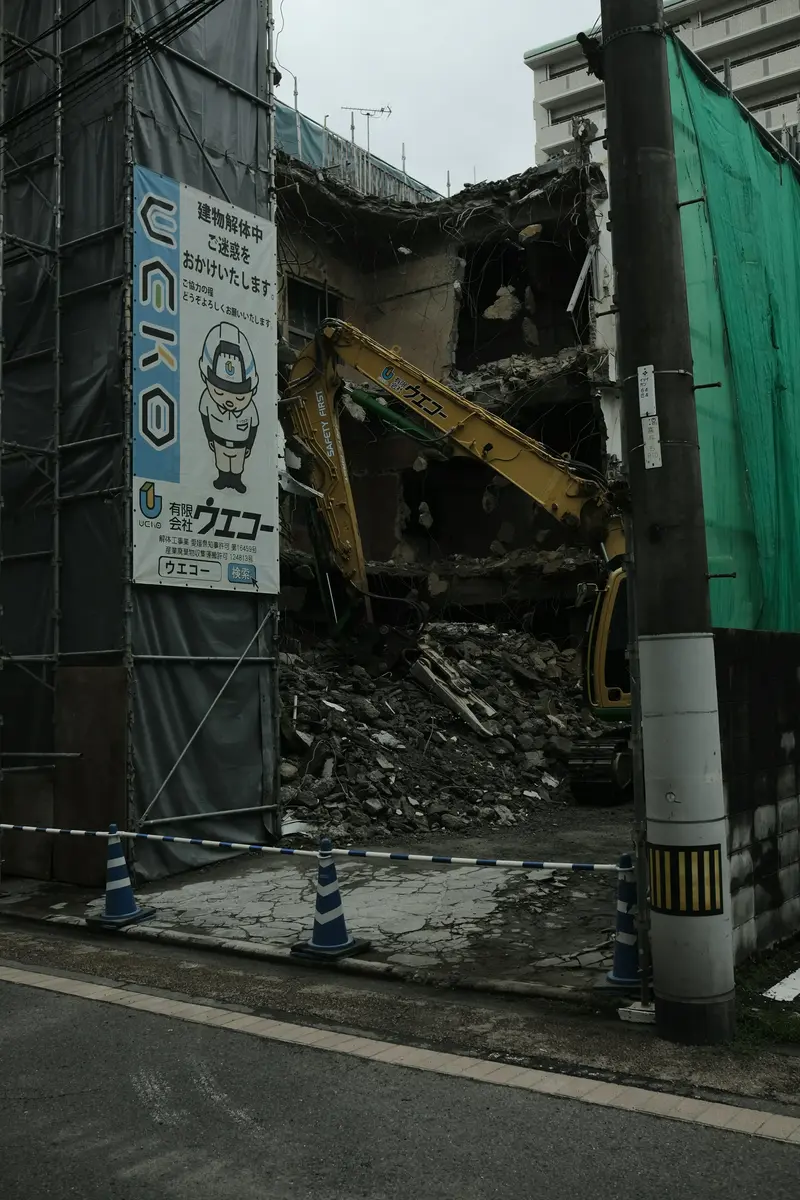
Picture a Tuesday afternoon. The excavator has been standing idle since Friday, the diesel bill for keeping it insured and serviced doesn't stop just because there's no site to send it to, and the phone hasn't rung with a new job in eleven days. Then word comes through that a competitor with half the machinery and none of the track record just landed the strip-out on a five-storey block, because they happened to be standing in front of the developer when the decision got made. That's the part nobody warns you about when you get into demolition. The work is physical and the risk is real, but most jobs are decided before they're ever advertised.
Learning how to get demolition jobs consistently usually starts in the wrong place: waiting to be added to a subcontractor list after someone else already got the call, or bidding against a fly-by-night outfit that skips PPE and insurance to shave a few thousand rand off a quote. That's the real enemy, not the guys down the road with a bigger fleet. The contractors who escape the feast-or-famine cycle aren't always the biggest. They're the ones a developer, a builder, or a demolition tender committee thinks of first, because the proof was already sitting in front of them before the job was even confirmed.
Why the Best Demolition Jobs Never Reach the Open Market
Most demolition work, especially the profitable strip-out, site clearance, and structural take-down packages, gets decided during a builder's or developer's planning phase, long before a public tender or a Facebook post ever appears. So how do you actually get demolition jobs on a regular basis instead of only picking up the scraps left over once everyone else has already quoted? By getting in front of the people making that early decision, having your paperwork ready before anyone asks for it, and showing up in the handful of places where demolition work is actually decided.
1. Get Onto a Builder's Subcontractor List Before the Tender Opens
Most demolition contracts in South Africa are awarded as a subcontract under a main building or civil contractor, not as a standalone job a client finds on their own. Building contractors, renovation project managers, and property developers keep a working list of subcontractors they call first for site clearance, strip-out, and demolition packages. If your name isn't on that list before a project reaches planning stage, you're only ever going to see the jobs that fall through, not the ones that matter.
Getting onto that list takes a direct approach, not an advert. Visit active building sites in your area, ask for the site agent or project manager, and leave behind a short company profile that shows your CIDB grade, your machinery list, and photos of completed jobs. Follow up by phone within a week, and ask specifically to be added as a quoted subcontractor for their next demolition or strip-out package, not just "kept in mind."
A one-page company profile with your CIDB registration number, grade, and class of work
Proof of public liability insurance and current safety file
Photos or a short list of past demolition, strip-out, or site clearance jobs
A list of the machinery and equipment you own or have on standing hire
Direct contact details for a decision-maker, not just a general office number
A note in your own CRM or spreadsheet logging who you met, what they need next, and when to follow up
2. Register With CIDB Under the Right Class and Track Tenders Properly
No contractor may carry out public sector construction work worth more than R200,000 without a valid registration with the Construction Industry Development Board (CIDB), under the CIDB Act of 2000. Demolition falls under one of the CIDB's specialist "S" class codes, so make sure your registration reflects the actual class of work you do, not just a general building grade, or you risk being disqualified from tenders you'd otherwise qualify for. Grades run from 1 to 9 based on your financial capacity and completed project value, and a grade is only valid for three years before it needs renewing.
Once registered, don't rely on stumbling across opportunities. Assign one person, even if that's you, to check the eTenders portal and relevant municipal and provincial tender bulletins on a set schedule, rather than only when things are quiet. Government demolition and site clearance work runs into the hundreds of millions of rand a year, and a large share of it goes unbid simply because smaller contractors check inconsistently.
Want a Website That Explains What You Offer?
Our website design service can build you a clear, mobile-friendly site listing your services, machinery, and CIDB registration, so builders and developers can confirm you're the real thing before they ever pick up the phone.
3. Build Referral Partners in Waste, Scrap, and Asbestos Removal
A demolition job rarely happens in isolation. Skip and waste removal companies, scrap metal buyers, excavation and earthmoving operators, and asbestos abatement specialists all hear about a demolition need before it's ever advertised, because a property owner usually contacts one of them first to ask what a knock-down would even involve. Building working relationships with these businesses, and offering to refer work back to them in return, puts you in the conversation at the earliest possible point.
This kind of referral pipeline takes longer to set up than posting a job listing, but it converts at a far higher rate, because the introduction already carries the trust of the person making it. A short list of three or four active partners in your area, contacted on a regular basis rather than once, will usually outperform any amount of paid advertising for demolition jobs specifically.
4. Prove Permit and Hazardous Material Compliance Before Anyone Asks
Under the National Building Regulations, a demolition permit must be obtained from the local authority before any structure can legally be taken down, and being able to walk a client through that process, rather than leaving them to figure it out, is an easy way to stand out. Being able to say clearly who applies for the permit, and how long it typically takes in your area, answers a question most clients don't know how to ask.
Hazardous materials are the bigger concern on anything built before the early 2000s. Under South Africa's Asbestos Abatement Regulations, any building suspected of containing asbestos needs a risk assessment and inventory carried out by a registered competent person before demolition work starts, and removal must be handled by an approved asbestos contractor with a formal clearance certificate issued afterward. Raising this proactively, rather than waiting for a client to ask, signals that you understand the liability they're carrying, which does more to win a nervous client's trust than any discount on price.
5. Turn Every Site Into Proof for the Next One
Every completed job is evidence for the next one, but only if it's documented. Photograph the site before, during, and after the work, keep a short record of the scope and turnaround time, and ask satisfied clients for a quick review or a written reference. This kind of proof does two jobs at once: it gives your referral partners something concrete to point to, and it gives a website or Google Business listing real content to show, so a builder searching for a demolition contractor in their area finds evidence of finished work rather than an empty page.
None of this replaces the relationships built through site visits and referral partners, but it does make sure that when someone does search online for how to get demolition jobs done properly in their area, or simply searches for a contractor by name after a referral, what they find backs up what they were already told.
- Get onto a builder's or developer's subcontractor list before a project reaches planning stage, since most demolition work is decided there, not on the open market
- Register with CIDB under the correct specialist class for demolition, and check tender portals on a fixed schedule rather than by chance
- Build ongoing referral relationships with waste removal, scrap, excavation, and asbestos abatement businesses who hear about jobs early
- Know the local authority demolition permit process and be ready to explain it, rather than leaving the client to work it out
- Handle asbestos and hazardous material compliance properly and mention it upfront, since that's what settles a nervous client's mind
- Document every job with photos and reviews so the proof is there the next time someone is deciding who to call
This is what how to get demolition jobs actually looks like once the guesswork is removed. Not waiting on the phone to ring between contracts, but being the name already on a builder's list, the registration already in order, and the compliance already proven before anyone has to ask for it. Once those pieces are in place, most of the work of staying booked happens quietly in the background instead of through another round of underbidding. If your current website isn't helping builders and developers find and trust you before that first call, take a look at our website design services and we'll help you build one that does.