
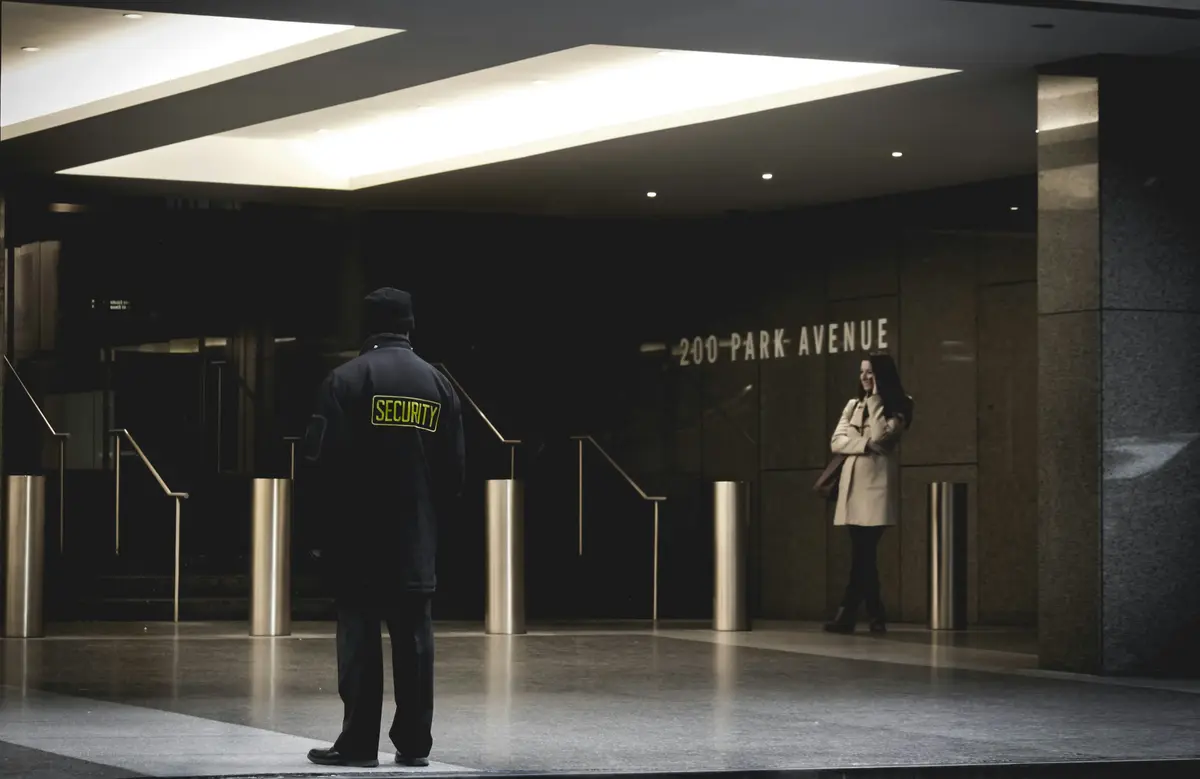
Most advice for growing a security company says post more on social media, run a few Facebook ads, and get active on LinkedIn. None of that is wrong exactly, it just misses what actually decides whether a property manager, an estate trustee, or a facility director signs with you. Security is a trust purchase, and the person making the call is rarely a consumer scrolling a feed. It's a manager who has to justify the decision to a board, and who is thinking about liability, not likes.
Figuring out how to get clients for a security company usually starts in the wrong place: matching quotes with the next unregistered outfit willing to undercut on an hourly rate. That race to the bottom is the real enemy, not the guarding company down the road. It fills a schedule with sites that churn every renewal because nothing beyond price ever set you apart. The businesses that escape it aren't the cheapest. They're the ones a board renews without shopping around, because the proof of reliability is already sitting in front of them.
Why More Ads Won't Fix a Trust Problem
A security contract is one of the few purchases where the buyer is betting their own reputation on your performance, so the decision leans far more on proof than on price. A security company grows faster by demonstrating reliability before the contract is signed, building direct relationships with the people who manage properties day to day, and showing up properly for the tenders that already exist, than by out-shouting every other guarding company online.
1. Win the First Client With a Free Site Assessment, Not a Quote
A phone quote tells a prospective client almost nothing about how you actually work. A free, on-site risk assessment does. Walking the property, noting weak points in access control, lighting, and patrol routes, and handing over a short written report gives the decision-maker something concrete to compare you against a competitor's one-line price. It also puts a guard or supervisor in front of the client before any money changes hands, which is exactly the kind of proof a risk-averse buyer needs.
Keep the assessment short and specific: three or four real observations about that property, not a generic checklist. A prospect who reads two things about their own site that they hadn't considered is far more likely to trust you with the rest.
2. Build Referral Pipelines With Property Managers and Estate Agents
The highest-margin contracts most guarding companies win rarely come from advertising at all. They come from property management companies, body corporate trustees, estate managing agents, and insurance brokers who deal with a security decision every time they take on a new building or write a new policy. These relationships take longer to build than a Facebook ad, but they convert far better, because the introduction already carries the trust of the person making it.
A short list of the property managers, estate agents, and insurance brokers active in your service area
A scheduled meeting with at least two of them a month, not a once-off introduction
A one-page overview of your services, PSIRA registration, and insurance left behind at every meeting
A simple thank-you or referral fee offered when an introduction turns into a signed client
A note in your CRM or spreadsheet tracking which partner sent which lead, so you know where to invest more time
Want a Website That Explains What You Offer?
Our website design service can build you a clear, mobile-friendly site listing your services, pricing tiers, and booking details, so customers and referral partners know exactly what you offer before they ever call.
3. Prove Compliance Before Anyone Has to Ask
Every corporate and government client will check for PSIRA registration before awarding a security contract, and most will also ask for proof of insurance, a valid Letter of Good Standing, and B-BBEE documentation. Waiting for a client to request these once negotiations are already underway slows everything down and signals disorganisation. Having them ready as a single compliance pack, PSIRA certificate, grading, insurance, and B-BBEE affidavit, lets you hand over in minutes what a competitor might take a week to assemble.
Buyers in this industry also worry about what happens once a guard is on site unsupervised. Being able to show proof of GPS patrol tracking, supervisor check-ins, or incident reporting during that first conversation answers the concern before it's even raised, and does more to win the contract than any amount of persuasive copy.
4. Track Tenders and RFPs Like a Pipeline, Not a Lottery
South Africa's government security procurement runs into the billions of rand a year, and PSIRA registration is a mandatory requirement for almost every one of those tenders. Most small and mid-sized security companies check for opportunities occasionally rather than systematically, which means strong tenders get missed simply because nobody was watching. Assigning one person to monitor tender portals and respond within a set window, rather than scrambling when a deadline is already close, is often the difference between winning and not bidding at all.
The same discipline applies to private RFPs from commercial property owners. A slow or incomplete response signals the same lack of organisation a client is worried about on site, so treat every RFP with the same urgency as an active incident.
- Don't compete on price alone. Offer a free, specific site assessment that shows a prospect exactly how you'd protect their property
- Build direct, ongoing relationships with property managers, estate agents, and insurance brokers rather than relying on ads alone
- Keep a compliance pack ready, PSIRA registration, insurance, B-BBEE documentation, so proof is instant rather than delayed
- Be able to show proof of supervision, such as GPS patrol tracking or incident reporting, since that's what closes a nervous buyer
- Treat tenders and RFPs as a tracked pipeline with a dedicated owner, not something checked occasionally
- Respond to every RFP quickly and completely, since a slow response undermines the same trust you're trying to sell
This is what how to get clients for a security company actually looks like in practice. Not underbidding every competitor in town, but proving reliability before the contract is signed, building real relationships with the people who manage properties day to day, and staying organised enough that compliance and tenders never slow you down. Once these pieces are in place, most of it keeps working quietly in the background while you focus on the sites you already guard. If your current website isn't pulling its weight in that mix, take a look at our website design services and we'll help you build one that does.